Property perimeters
Define the site boundary while preserving appropriate views for staff, drivers, customers, lighting, and cameras.
Commercial perimeters · service areas · gates
Commercial fencing should support the way a property operates. Plan perimeter lines, service yards, equipment enclosures, parking boundaries, walk gates, and vehicle access around the site—not a generic package.
Chain link · ornamental metal · screening · walk and vehicle gates
Commercial fencing Chicago businesses can plan around
A commercial fence can separate customers from operations, protect equipment, organize a service yard, define parking, or control access after hours. Each goal changes the useful height, visibility, framework, gate layout, and screening approach.
Chicago lots add tight access, alley traffic, existing pavement, loading activity, neighboring properties, and address-specific zoning questions. A useful commercial fence installation scope records those conditions before footage is priced.
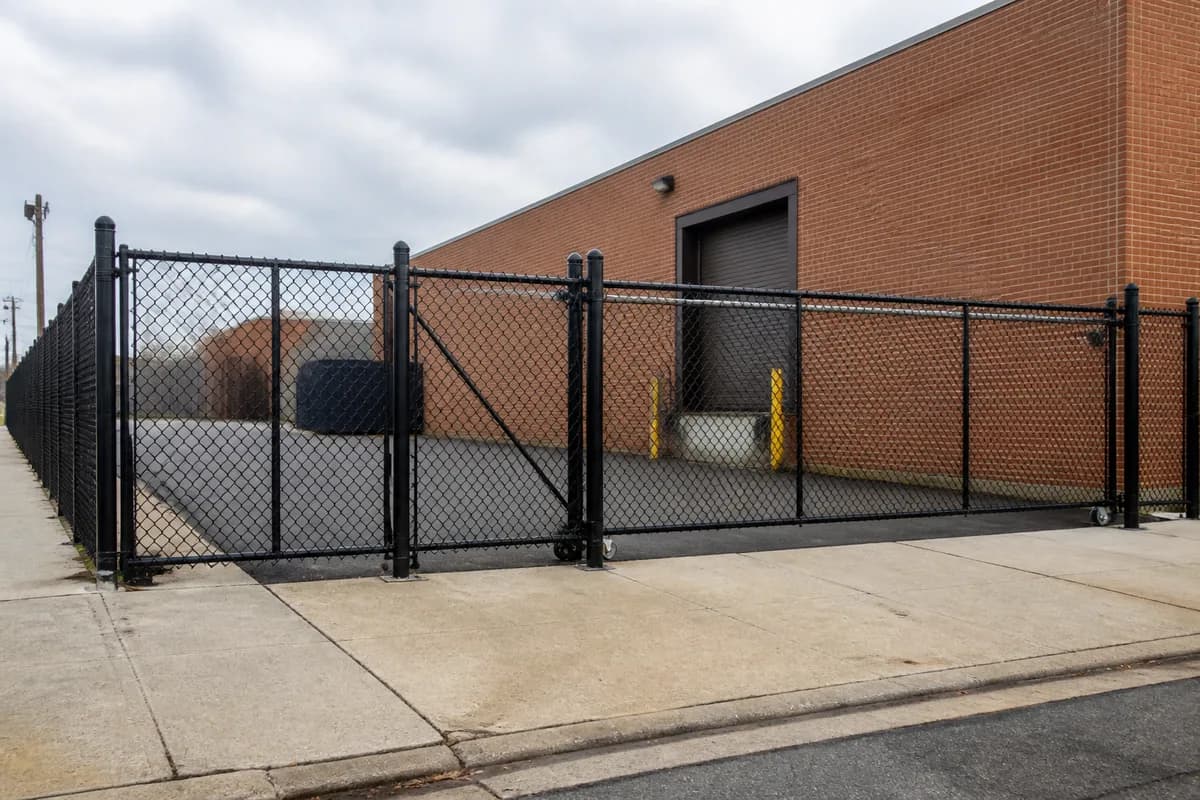
Common applications
The fence line, openings, and material should follow the people, vehicles, equipment, and visibility needs already on the property.
Define the site boundary while preserving appropriate views for staff, drivers, customers, lighting, and cameras.
Separate loading, refuse, storage, or working areas without interfering with pickups, deliveries, and maintenance.
Coordinate the enclosure with access for service personnel, replacement equipment, airflow, and required clearances.
Plan around vehicle movement, sightlines, snow, curbs, gates, and any zoning-required screening treatment.
Organize resident, visitor, bin, parking, and service access while keeping gate use understandable.
Match gate width, swing or slide path, hardware, and locking strategy to the traffic that uses the opening.
Commercial chain link fencing
Chain link is often considered for service yards, equipment areas, storage, loading zones, and broad perimeters. Height, mesh opening, wire, terminal posts, line posts, rail, bottom support, coating, and gate frames should be specified as one system.
It is not automatically the right or permitted screen for every commercial condition. Chicago zoning may call for masonry, wood, or ornamental fencing around certain parking and vehicular-use areas. Review the address and site use before committing to a material.
Compare Commercial Chain Link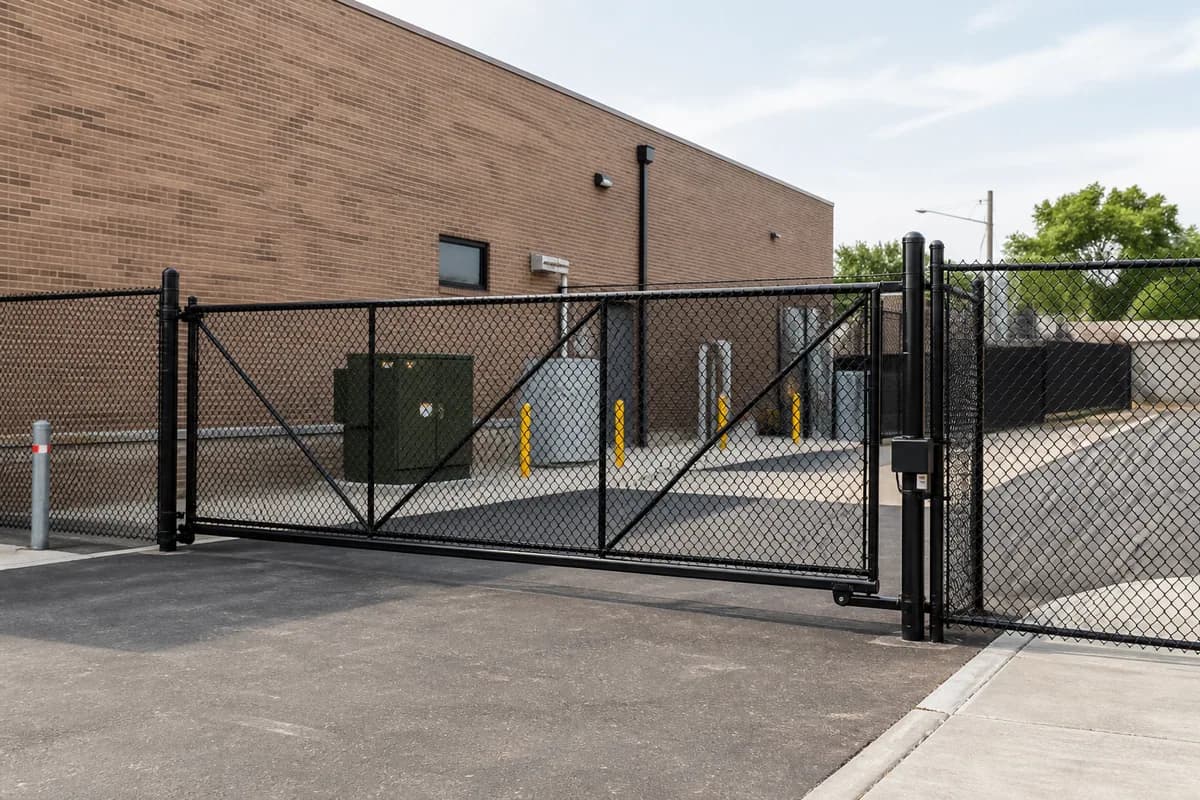
Material and screening choices
A customer-facing frontage, a service alley, and an equipment yard rarely need the same fence.
Galvanized and black-coated systems preserve sightlines and can be configured with different heights, mesh, framework, and gate types.
Open metal picket fencing can define frontages, walkways, and controlled edges where appearance and visibility both matter.
Solid, semi-private, or slatted systems change wind load, visibility, maintenance, and code fit. Screening must be reviewed for the actual location.
Commercial gates & access
A gate needs usable clearance and a safe path through the property. Vehicle turning, pavement slope, snow, wind, deliveries, emergency access, locking, and frequency of use all affect the frame and hardware.
Commercial fence cost
Two properties with similar footage can require different framework, gates, removal, access, pavement work, or screening. A commercial estimate should make those differences visible.
Request a Commercial EstimateCommercial installation process
Identify traffic, access, security, screening, and approval questions early so the estimate describes the system the property actually needs.
Containment, privacy, access, appearance, repair, or security—start with what the fence needs to do.
Measure the line, look at grade and access, discuss gates, and flag property or permit questions early.
Align on material, height, finish, hardware, removal work, and the details included in the estimate.
Set the fence to the agreed layout, check operation, and review the completed work and care needs.
Commercial fence cost depends on measured footage, height, material, framework, gates, demolition, access, grade, concrete conditions, security details, and permit or zoning requirements. Vehicle gates and heavier terminal posts can affect the scope more than a simple per-foot figure suggests, so a site-specific estimate is the useful starting point.
Chain link is often considered for visible, adaptable perimeters and service areas. Ornamental metal can suit customer-facing boundaries, while solid or semi-private systems may be appropriate where screening is allowed and needed. The right choice follows the property use, desired visibility, traffic, security goal, and applicable zoning rules.
Privacy slats, smaller mesh, heavier framework, controlled gates, and approved security details can be considered when the fence, wind exposure, site use, and local rules support them. Screening increases wind load, and high-security toppings require address-specific code review rather than a standard residential specification.
Common layouts include single walk gates, double-swing vehicle gates, and sliding gates where the site has adequate side room. Clear opening, vehicle turning, grade, snow, daily cycles, latch or lock needs, and emergency access all influence the appropriate frame and hardware.
Requirements vary with fence height, location, property use, parking or loading areas, landmark conditions, and security features. Chicago zoning can also affect acceptable screening. Current requirements should be checked for the project address before the fence type and height are finalized.
Plan the commercial perimeter
Share the Chicago address, fence line, business use, vehicle and walk gates, preferred material, and any known screening or security requirement.