Bent pickets or panels
Impact damage may affect one component, a complete section, brackets, or the posts supporting both sides.
Panels · rails · posts · gates
A bent section, loose rail, leaning post, or dragging gate may be a localized repair—or a sign of movement elsewhere in the system. Start with the failure, its cause, and whether compatible parts are available.
Damage assessment · alignment · hardware · repair-versus-replacement planning
Diagnose before replacing
Aluminum fence repair in Chicago can involve posts, rails, pickets or panels, brackets, fasteners, gate frames, hinges, and latches. Impact, soil or footing movement, loose connections, hardware wear, and grade changes can produce similar-looking symptoms for different reasons.
A useful aluminum fence repair estimate separates a cosmetic issue from structural movement. Wider photos, close views, the fence height and style, gate symptoms, and the location of the damage help define what needs an on-site review.
Request an Aluminum Repair Estimate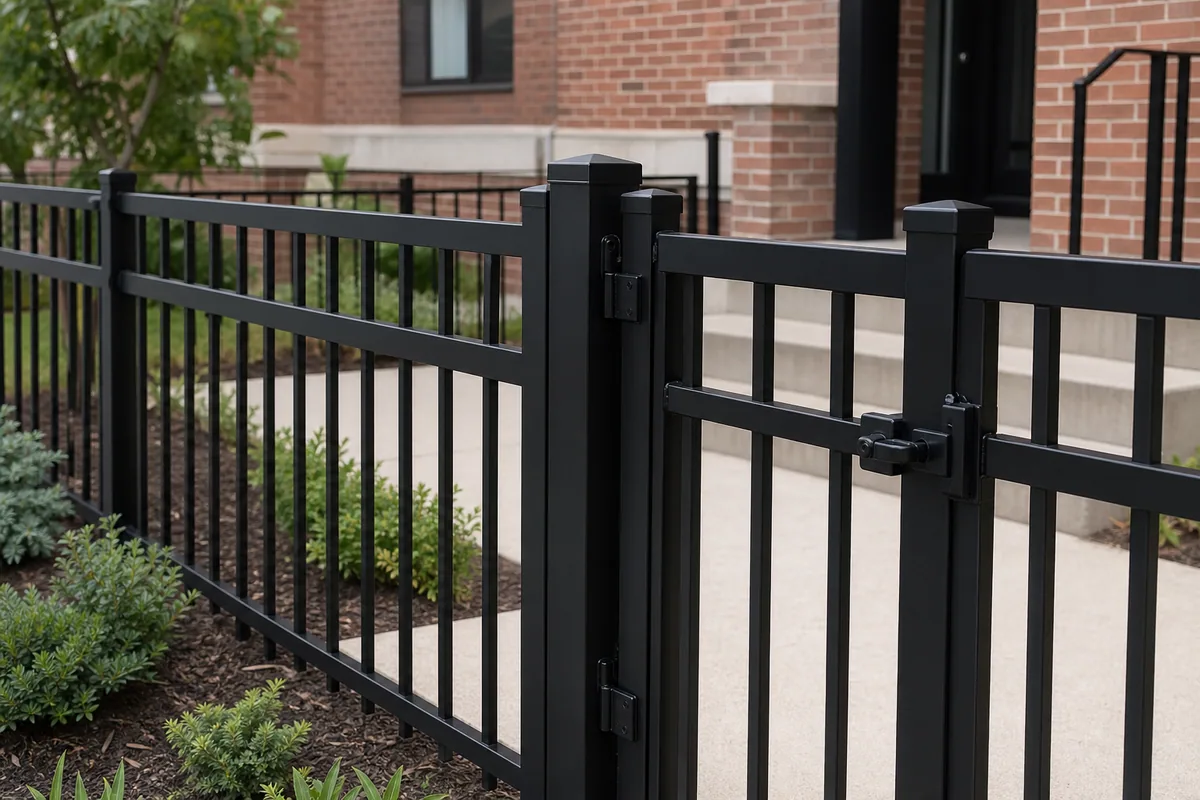
Common aluminum fence repairs
Compatible replacement components and the condition of adjacent posts and sections determine whether a targeted repair is practical.
Impact damage may affect one component, a complete section, brackets, or the posts supporting both sides.
Connections, brackets, fasteners, and the alignment of adjacent posts should be checked before reattachment.
A moving post can point to footing, soil, frost, impact, or drainage conditions that a surface adjustment will not solve.
Hinges, frame alignment, latch position, support posts, pavement, and grade can all contribute to poor operation.
Scratches, chips, oxidation, fading, and replacement-part color differences need realistic expectations before touch-up.
Caps, brackets, fasteners, hinges, and latches must be compatible with the existing system and intended use.
Repair or replace?
A focused repair can make sense when the failure is contained. A larger scope may be more practical when movement or damage extends through the system.
Aluminum fence repair cost
A hinge adjustment is not the same scope as resetting a gate post, replacing a damaged section, or rebuilding an opening after impact. Diagnose first, then compare options.
Prepare a Repair RequestAluminum gate repair
A gate that will not close may have worn or loose hardware, a racked frame, a moving hinge post, a changed pavement edge, or insufficient clearance for the grade. The opening should be checked as a complete assembly.
The repair plan can then distinguish an adjustment, hardware replacement, frame or section work, post correction, or a redesigned opening. That prevents repeated latch work when the support condition is the actual cause.
Aluminum fence repair process
Photos can help identify the issue, but post movement, gate alignment, footing condition, and matching parts may still require an on-site review.
Containment, privacy, access, appearance, repair, or security—start with what the fence needs to do.
Measure the line, look at grade and access, discuss gates, and flag property or permit questions early.
Align on material, height, finish, hardware, removal work, and the details included in the estimate.
Set the fence to the agreed layout, check operation, and review the completed work and care needs.
Review repair planning for loose chain link, damaged rails, broken boards, leaning posts, and problem gates.
See Chicago fence repair servicesCoordinate the repair with traffic, access, visibility, screening, and the broader commercial fence system.
Explore commercial fencingCompare ornamental aluminum with chain link, vinyl, wood, privacy, gates, and other fence options.
Compare fence typesOften, a localized problem can be repaired when nearby posts, rails, and panels remain sound. Bent pickets, loose rails, damaged sections, gate hardware, or an isolated post may be repair candidates. Widespread movement, extensive impact damage, or unavailable matching components can shift the decision toward replacement.
Repair cost depends on the failed component, number of affected sections, post or footing condition, gate involvement, access, finish matching, and whether compatible replacement parts are available. An on-site diagnosis is usually needed before repair and replacement options can be compared fairly.
A gate can drag because of hinge wear, loose hardware, frame movement, a shifting gate post, footing movement, or grade and pavement changes. Adjusting hardware may solve a minor issue, but a moving post or frame needs to be addressed so the problem does not quickly return.
A close match may be possible when the original manufacturer, style, and finish are identifiable and compatible parts are available. Sun exposure, age, discontinued products, and field-applied touch-up coatings can make an exact match difficult. That limitation should be discussed before repair work begins.
Share photos of the full fence line and close views of the damage, along with the property address, approximate height, affected sections, gate symptoms, and any known impact or movement. Wider photos help distinguish a single damaged component from a larger alignment or footing issue.
Start with the damage
Include the Chicago property, approximate fence height, number of affected sections, how the damage occurred, and whether posts or gates have moved.