Perimeter
Define the boundary while preserving visibility for staff, drivers, or cameras.
Featured service · Chicago, Illinois
Need a new chain link fence or a repair for loose mesh, a damaged rail, leaning posts, or a problem gate? Compare galvanized and black-coated systems, gate configurations, repair options, and the site details that shape a useful estimate.
Residential · Multi-unit · Commercial · Repair · Gates
A complete guide
“Chain link” describes a family of fence systems, not a single product. Two installations can use different wire gauges, mesh openings, post sizes, rail, fittings, coatings, heights, and gate frames. Those choices affect appearance, strength, routine upkeep, and price.
Chicago properties add their own questions: Can materials reach the rear yard through the gangway? Does a drive gate need to clear an alley or parking pad? Is the old fence on the legal property line? Does the height require a permit? Answering those questions early produces a better scope and fewer surprises.
Residential chain link fencing
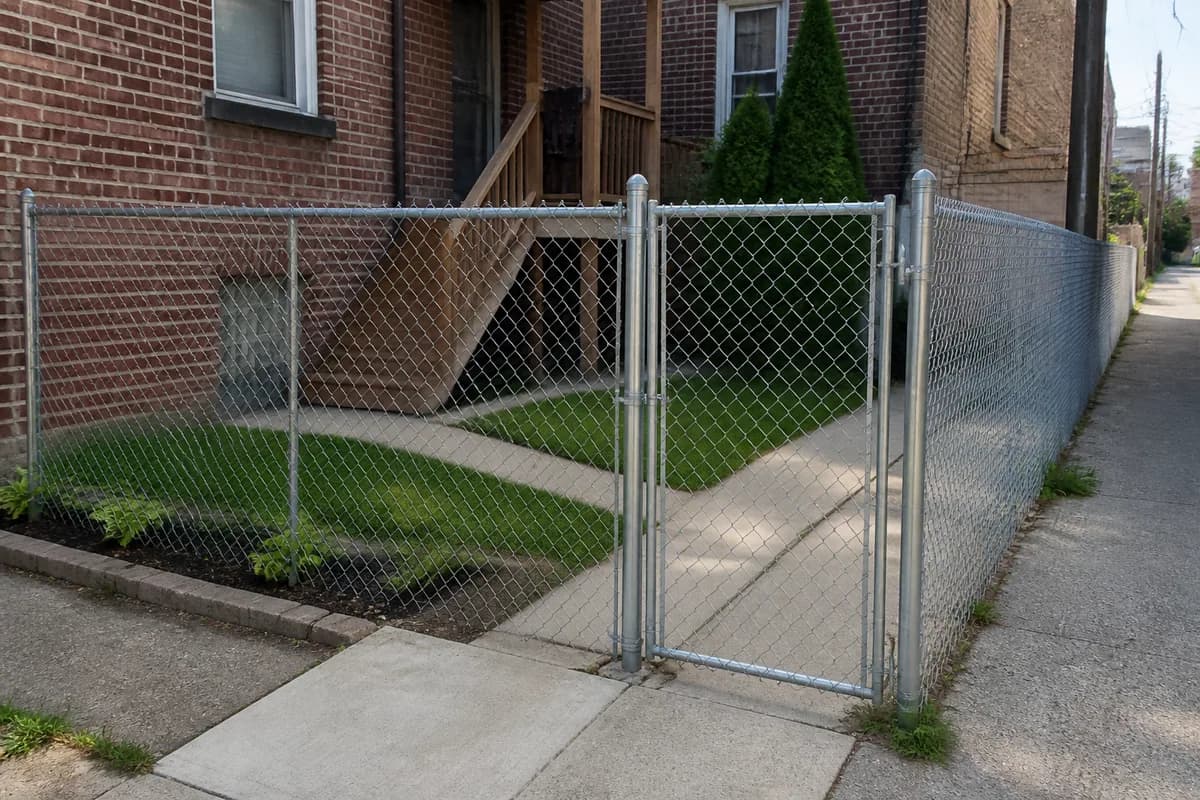
Residential chain link can enclose a backyard, create a pet area, separate a parking pad, control access beside a detached garage, or add a walk gate to a narrow side passage. Because the mesh remains visually open, it can feel lighter than a solid fence on a small city lot.
The layout should still be deliberate. A gate that is too narrow for bins or lawn equipment becomes a daily frustration. A latch placed without considering children, pets, or the direction of travel may not solve the original problem. On older properties, the location of an existing fence should not be treated as proof of the legal boundary.
Commercial chain link fencing
Commercial chain link is commonly considered for service yards, equipment areas, storage, loading zones, building perimeters, and controlled access points. The appropriate specification may call for taller fabric, heavier wire and framework, different mesh, bottom rail or tension wire, and gate hardware suited to more frequent use.
Chain link is not automatically allowed as every kind of required commercial screen. Chicago zoning can require masonry, wood, or ornamental fencing for certain parking and vehicular-use conditions. That is why a commercial estimate should start with the actual address, fence purpose, and property layout—not a blanket promise based only on footage.
Explore commercial fencing in ChicagoDefine the boundary while preserving visibility for staff, drivers, or cameras.
Plan walk and vehicle gates around clear openings, turning room, grade, and frequency.
Coordinate height, mesh, wire, framework, footing, and approved security details.
Finish comparison
Both options use woven steel. The visible finish is only one part of the specification, but it changes how the fence sits in the landscape.
Neither finish should be described as “rust-proof.” Cut edges, damaged coating, salt exposure, standing moisture, and age can affect metal components.
What is actually being quoted?
A clear estimate should identify the system—not rely on a color and height alone.
Driven by containment, privacy, security, placement, and permit or zoning limits.
Gauge and mesh opening influence rigidity, appearance, security, and cost.
Line posts, terminal posts, top rail, and optional bottom support work as a system.
Galvanized or coated fabric should coordinate with posts, rail, fittings, and gate frames.
Post setting responds to height, soil, grade, loading, and the demands at gates and corners.
Opening width, swing or slide path, grade, latch, hardware, and traffic need to be explicit.
Chain link fence cost in Chicago
Two fences with the same linear footage can require very different gate hardware, framework, removal work, and site access. A useful estimate should identify the fence height, wire and coating, framework, gate openings, removal, and permit responsibilities.
Request a Measured Estimate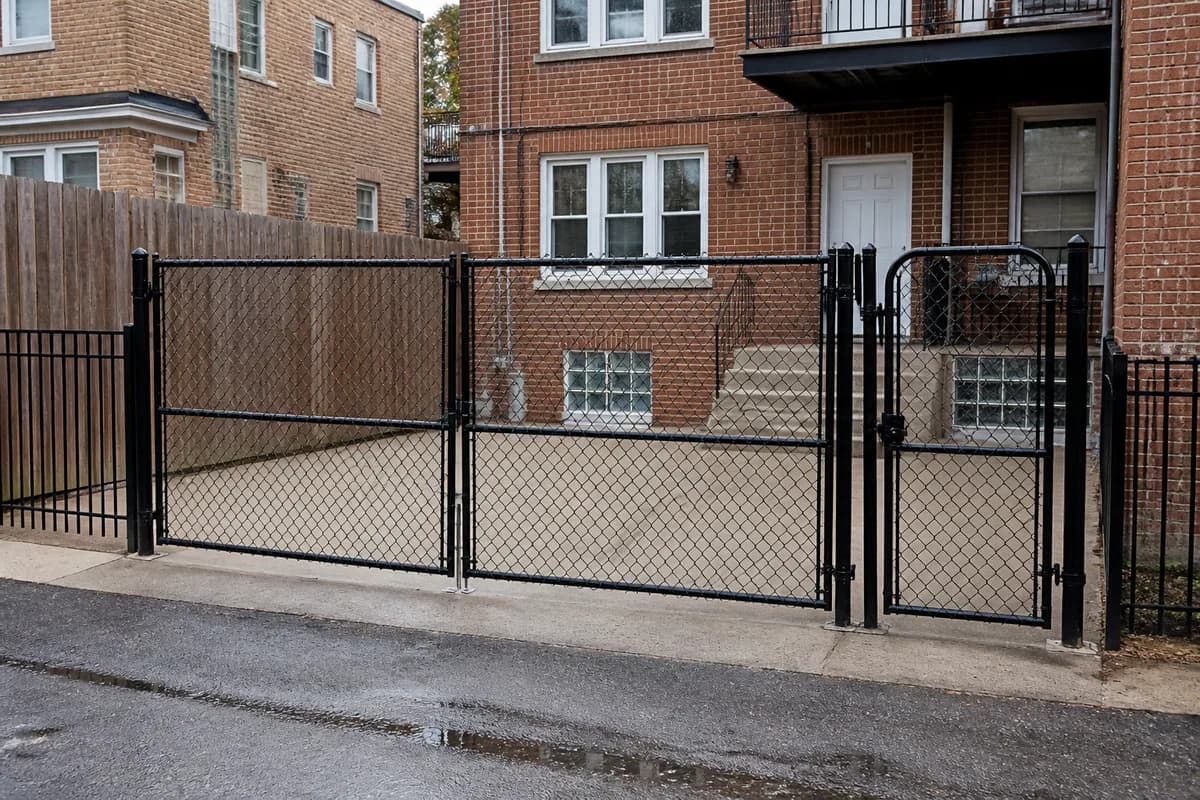
Chain link gates & access
Start with the clear opening—not just the overall frame. A walk gate should comfortably handle everyday traffic. A driveway or service gate needs room for the actual vehicle, safe movement, hardware, and the surrounding grade.
For people, pets, bins, and smaller equipment. Hinge direction and latch location matter in tight passages.
Creates a wider opening with two leaves; swing space, center hardware, grade, and wind all deserve attention.
Can preserve space where swing clearance is limited, provided the site has the run-back room and suitable grade.
Privacy options
Privacy slats weave through the mesh to reduce views through a chain link fence. They can be useful around a yard, equipment area, or service zone, but the result is not identical to a solid wood or vinyl wall. Color, coverage, fence height, viewing angle, and light all affect privacy.
Slats and screens also catch more wind. Posts, footings, framework, mesh, and site exposure should be evaluated before adding them—especially on a tall fence or an open commercial property.
Compare solid privacy fencingChain link fence repair
Loose fabric, a bent top rail, damaged fittings, leaning posts, and gate problems can have different causes. The best choice depends on how localized the damage is and whether the remaining posts, framework, and layout still do their jobs.
Compare chain link, picket, post, panel, and gate repair options
Honest comparison
Chicago permits & safe digging
They should not be treated as interchangeable.
Under Chicago Municipal Code §14A-4-402.1, a fence no more than five feet above the ground on both sides can be exempt from a building permit when it conforms to the Chicago Zoning Ordinance. Section 14A-4-404.7 requires a permit for a fence over five feet.
The exemption is not blanket approval. Placement, corner visibility, pool rules, landmark or planned-development status, and other conditions may affect a project. Requirements should be checked for the actual address and design.
Fence posts require excavation. Chicago’s rules require a non-emergency 811 Chicago dig-ticket request before digging begins. Required utility responses and markings should be confirmed before post holes are opened.
A dig ticket addresses underground facilities. It does not approve fence height or location, and it does not establish the legal property boundary.
A permit, utility mark, old fence, hedge, or neighbor’s memory does not prove the legal lot line. The owner should be confident about the boundary before installation.
When the line is unclear—or when a narrow gangway leaves little room for error—a professional survey is the safest reference.
This is practical planning information, not legal advice or a permit determination. City rules and interpretations can change; verify current requirements for the property.
Installation process
The exact schedule depends on scope, materials, access, approvals, weather, and site conditions. The working sequence should still be clear.
Containment, privacy, access, appearance, repair, or security—start with what the fence needs to do.
Measure the line, look at grade and access, discuss gates, and flag property or permit questions early.
Align on material, height, finish, hardware, removal work, and the details included in the estimate.
Set the fence to the agreed layout, check operation, and review the completed work and care needs.
Chicago service area
We discuss chain link projects across Chicago and select nearby communities. Tell us the property address or ZIP code, fence goal, and whether access is through an alley, driveway, or narrow side yard.
Explore Service AreasThe useful number is a measured, site-specific estimate—not a generic per-foot price. Total cost changes with fence height, wire gauge, coating, footage, corner and terminal posts, gates, old-fence removal, access, grading, concrete work, and permit needs. Chicago Fencing Inc. reviews those items and prepares a clear project scope before scheduling.
Both use steel mesh. Galvanized chain link has a familiar silver finish and is often chosen for practical, budget-conscious enclosures. Black-coated chain link has a darker finish that tends to recede into landscaping and can give a yard or commercial frontage a more finished appearance. The right choice depends on exposure, appearance goals, and budget.
Permit and zoning requirements depend on fence height, placement, property conditions, and special overlays. Chicago has historically required a permit for fences over five feet, while corner lots, landmark properties, and some security features can involve additional review. Requirements can change, so the current City of Chicago guidance should be checked for the specific property before work begins.
Yes. Fence installation involves digging post holes, so underground utilities must be considered before excavation. Within Chicago, the City’s 811 Chicago system is used for dig notifications. A ticket is not the same as a fence permit; both steps may apply to a project.
Often, yes. Chain link preserves sightlines and usually takes up less visual space than a solid privacy fence. Careful gate placement is especially important in narrow gangways, alley-facing yards, parking pads, and compact lots.
Privacy slats or screening may be added when the framework, mesh, local rules, and wind exposure are appropriate. Because screening increases wind load, the posts and footings should be evaluated rather than treating slats as a purely decorative add-on.
A localized problem such as loose fabric, a damaged top rail, or gate hardware may be a good repair candidate when posts and footings remain sound. Replacement is often more sensible when several posts lean, corrosion is widespread, the fence line no longer fits the property’s needs, or repeated patches would approach the cost of a new system.
Common options include single walk gates, double drive gates, and sliding gates for locations where swing clearance is limited. Gate width, grade, traffic, latch needs, and vehicle access all affect the frame and hardware specification.
Yes. Commercial chain link can be configured around yards, equipment, parking, service areas, and access points. Height, heavier framework, smaller mesh, controlled gates, privacy screening, and approved security toppings can be considered based on the site and applicable rules.
Some work can be scheduled in colder weather, but frozen ground, snow cover, concrete conditions, and site access can affect timing. The practical decision is made from the property conditions and forecast rather than the calendar alone.
Request a chain link estimate
We’ll help organize the height, finish, framework, access, repair or removal work, privacy, and address-specific planning questions into a practical project scope.